.png)
catalyst for human potential
downtown seattle's home for personalized, integrative care: acupuncture, herbs, and functional medicine
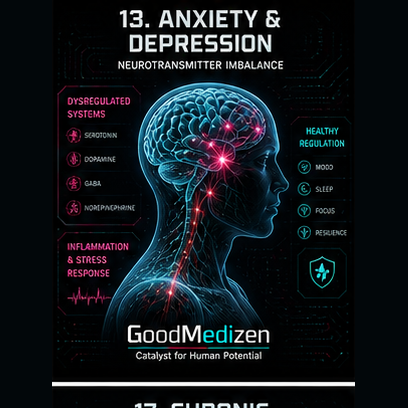
Depression Has More Than One Cause — And They're Worth Identifying
Depression as a clinical category is enormous. It includes major depression, persistent depressive disorder, postpartum depression, seasonal patterns, treatment-resistant depression, atypical depression, depression with anxious features, and the depressive components of bipolar spectrum. The standard treatment paradigm — SSRIs, therapy, sometimes augmenting agents — helps some people substantially. For others, it produces partial benefit with significant side effects. For others still, it doesn't work at all.
The question we're interested in is what's driving the depressive state in the specific person. Depression isn't just "low serotonin" — that model has been substantially revised in research over the past decade. The actual drivers vary: chronic neuroinflammation, mitochondrial dysfunction, gut dysbiosis, thyroid dysfunction, post-viral states, chronic infection burden, hormonal imbalance, nutritional deficiencies (especially B12, folate, vitamin D, omega-3s), trauma physiology, and disrupted sleep architecture all produce depression through different mechanisms. Identifying which mechanism is operating changes which treatments will work.
This isn't anti-medication advice. SSRIs and other psychiatric medications are genuinely helpful for many people, and we work alongside psychiatric prescribers when appropriate. The case we're making is that the upstream drivers also deserve attention — and addressing them often improves the response to medication or makes lower doses sufficient.
What's Actually Happening in Depression
Inflammatory depression. A substantial body of research now identifies inflammatory cytokines (especially IL-6, TNF-alpha) as drivers of depressive symptoms. Inflammation impairs serotonin synthesis (by shunting tryptophan toward kynurenine pathway metabolites), reduces BDNF (brain-derived neurotrophic factor), and directly affects mood circuits. Patients with elevated hs-CRP often respond differently to treatment. Anti-inflammatory interventions can change the picture.
Mitochondrial and energetic depression. The bone-deep fatigue, low motivation, and "can't get going" pattern often has a mitochondrial component. Depression after chronic illness (Long COVID, post-EBV, post-Lyme) frequently fits this picture. Mitochondrial support changes outcomes.
Gut-brain depression. Gut dysbiosis affects serotonin production (about 90% of which happens in the gut), inflammatory signaling, and stress regulation. The microbiome-depression link is increasingly well-documented. Patients with depression alongside GI symptoms benefit substantially from gut work.
Thyroid depression. Subclinical hypothyroidism, undertreated hypothyroidism, and Hashimoto's all produce depressive symptoms. Standard TSH testing often misses these patterns. Free T3, reverse T3, and antibodies need to be checked.
Hormonal depression. Estrogen-progesterone fluctuations, perimenopause, postpartum, and PMDD patterns all involve hormonal mechanisms that respond to hormonal-pattern interventions, not just antidepressants.
Nutritional depression. B12, folate (especially in MTHFR variants), vitamin D, omega-3 fatty acids, and methylation status all affect mood. Frank deficiencies produce depression. Subclinical deficiencies amplify other contributors.
Trauma physiology. Past trauma produces measurable nervous system patterning that includes depressive components — dorsal vagal shutdown, dissociation, anhedonia. Trauma-aware approaches are often essential.
Sleep architecture. Disrupted sleep — reduced REM, fragmented sleep, low slow-wave sleep — directly drives depressive symptoms. Sleep apnea is underrecognized as a depression driver.
Post-viral depression. Long COVID, post-EBV, and other post-infectious states produce depression with neuroinflammatory mechanisms. The depression often resolves when the underlying picture is addressed.
Where TCM Comes In
Chinese medicine has frameworks for what it calls Shen disturbance, qi stagnation, and the depleted-spirit pictures that map onto clinical depression patterns.
Liver Qi Stagnation. Stuck-feeling depression with frustration, irritability, sighing, chest tightness, PMS, sometimes alternating with anger. Treatment soothes liver qi.
Liver Qi Stagnation transforming to Heat. Same pattern with prominent heat — irritability, agitation, sleep disruption, sometimes with rage component. Treatment soothes liver and clears heat.
Spleen Qi Deficiency. Heavy fatigue, low motivation, brain fog, digestive issues, weight changes, the "can't get up" depression. Treatment tonifies the spleen.
Heart-Spleen Deficiency. Depression with overthinking, exhaustion, poor sleep, palpitations, anxiety, post-burnout pictures. Treatment tonifies both.
Kidney Yang Deficiency. Deep depression with cold intolerance, low back weakness, no libido, profound fatigue, the constitutionally depleted picture. Common in long-standing depression and post-illness depression. Treatment warms and tonifies.
Heart Yin Deficiency. Depression with anxiety, insomnia (especially trouble falling asleep), palpitations, restlessness. The wired-and-depleted pattern. Treatment nourishes heart yin.
Phlegm-Damp obstruction. Heavy depression with brain fog, lethargy, chest oppression, often metabolic dysfunction. Treatment transforms phlegm and clears damp.
How We Approach Depression
Depression care is collaborative. We coordinate with therapists, psychiatrists, and other prescribers. We don't replace appropriate mental health care — we add upstream and adjunctive layers.
Acupuncture has substantial evidence for depression. Multiple meta-analyses have shown effects comparable to or augmenting standard antidepressant treatment, with effects on monoamine signaling, BDNF expression, HPA axis regulation, and inflammatory cytokine reduction. Treatment addresses both the autonomic component and the specific TCM pattern.
Chinese herbal medicine for the specific TCM pattern. Several formulas have direct research evidence for depression. Selection requires expertise, especially with patients on antidepressants — some herbs (St. John's Wort especially) interact significantly with SSRIs.
Functional medicine workup. Comprehensive testing: full thyroid panel, methylation status (especially methylfolate, methylcobalamin, MTHFR), vitamin D, omega-3 index, fasting insulin and HbA1c, hs-CRP and inflammatory markers, hormone panels (especially in cyclical or postpartum depression), gut function evaluation, EBV serology when post-viral pattern suspected.
Anti-inflammatory interventions. Omega-3 fatty acids at therapeutic doses (specifically EPA-dominant, with strong research evidence for depression), curcumin, addressing inflammatory food triggers, reducing systemic inflammatory load.
Targeted nutritional support. Methylated B-complex (especially when MTHFR variants are present), vitamin D to optimal levels, magnesium, SAM-e or 5-HTP in select cases (cautiously with antidepressants), L-tyrosine for catecholamine support when low motivation predominates. Adaptogens for HPA support.
Mitochondrial support. CoQ10, alpha-lipoic acid, NAD+ precursors, acetyl-L-carnitine for the energetic depression pattern.
Sleep optimization. Address whatever's disrupting sleep. Consider sleep apnea evaluation — often missed in depression presentations.
Lifestyle integration. Exercise has antidepressant effect comparable to medication in research — we help with practical implementation. Sun exposure (especially morning), strength training, social connection, and meaningful structure. Light therapy for seasonal patterns.
Coordination of care. When medication and therapy are part of the picture, we work alongside those clinicians. We don't recommend stopping antidepressants without that physician's involvement — SSRI discontinuation requires careful tapering and monitoring.
Trauma-informed support. When trauma is part of the picture, we coordinate with therapists familiar with somatic, EMDR, IFS, or other trauma-specific modalities.
When to Consider Us
- You've tried antidepressants and want to add upstream physiological work
- You have depression alongside hormonal patterns (PMS, perimenopause, postpartum)
- You have depression alongside thyroid dysfunction or autoimmune conditions
- You have depression after chronic illness, Long COVID, or significant viral illness
- Your depression has prominent fatigue and energetic features (mitochondrial pattern)
- You have depression with significant gut symptoms or inflammation
- You have seasonal patterns and want comprehensive support
- You have postpartum depression and want pattern-aware integrative care
- You want to support gradual reduction of medication (in coordination with prescriber)
- You want to address the mechanisms driving depression rather than only managing symptoms
Important Note
If you are having thoughts of suicide or self-harm, please reach out for immediate support: call or text 988 (Suicide and Crisis Lifeline), or go to your nearest emergency room. Acupuncture and integrative care are valuable adjuncts, not substitutes for crisis intervention.
Selected References
- Smith, C. A., et al. (2018). Acupuncture for depression. Cochrane Database Syst Rev, 3, CD004046.
- Miller, A. H., & Raison, C. L. (2016). The role of inflammation in depression: From evolutionary imperative to modern treatment target. Nat Rev Immunol, 16(1), 22–34.
- Sublette, M. E., et al. (2011). Meta-analysis of the effects of eicosapentaenoic acid (EPA) in clinical trials in depression. J Clin Psychiatry, 72(12), 1577–1584.
- Anglin, R. E., et al. (2013). Vitamin D deficiency and depression in adults: Systematic review and meta-analysis. Br J Psychiatry, 202, 100–107.
- Cryan, J. F., et al. (2019). The microbiota-gut-brain axis. Physiol Rev, 99(4), 1877–2013.
- Schuch, F. B., et al. (2016). Exercise as a treatment for depression: A meta-analysis adjusting for publication bias. J Psychiatr Res, 77, 42–51.