.png)
catalyst for human potential
downtown seattle's home for personalized, integrative care: acupuncture, herbs, and functional medicine
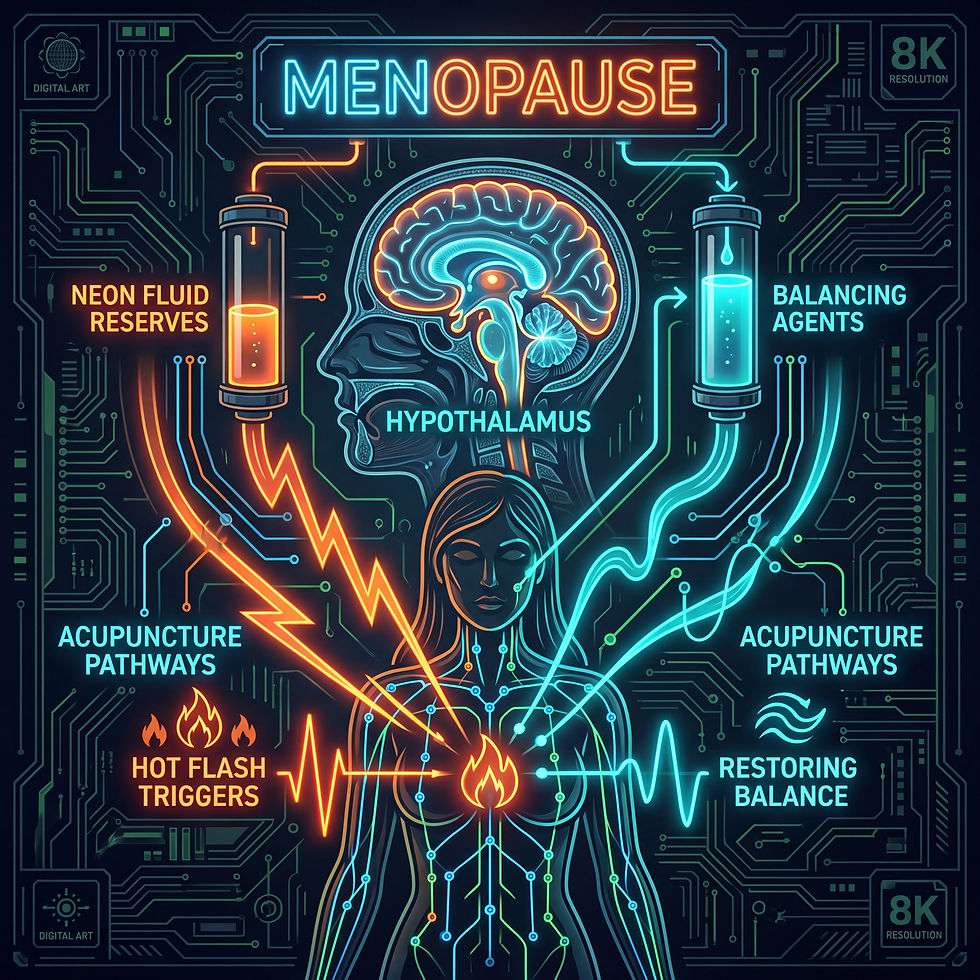
If Menopause Is Natural, Why Does It Feel So Wrong?
That's the question most women end up asking somewhere around 43, 47, 51 — whenever it hits. You've been told it's a "natural transition," that it happens to everyone, that it's not a disease. All technically true. None of it explains why you can't sleep, why your moods are unrecognizable, why your body feels like it belongs to someone else, why you're suddenly waking up at 3 a.m. drenched in sweat, or why the doctor you brought this to shrugged and offered you an antidepressant.
Menopause isn't a disease. It's also not nothing. It's a massive, multi-system, years-long shift in how the body signals to itself — and most of the suffering associated with it comes from specific, identifiable physiological changes that can be addressed with specific, identifiable tools. You don't have to white-knuckle through it. You also don't have to accept the false binary of "just take HRT" or "just suffer" as your only options.
What Menopause Actually Is
Menopause is defined as the point 12 months after your final menstrual period. The years leading up to it — when hormone levels start fluctuating and symptoms often emerge — is perimenopause, which typically lasts 4-10 years. Everything after that final period is postmenopause.
At the core of the transition is a shift in the HPG axis — the hypothalamus-pituitary-gonadal communication loop that's been running your reproductive physiology since puberty. The ovaries contain a finite supply of follicles; by the time you reach your mid-40s, the remaining follicles are less responsive to the pituitary's signals. The pituitary, sensing the diminishing response, cranks up FSH (follicle-stimulating hormone) to get the ovaries' attention. Estradiol production becomes erratic — high some months, crashing others — before eventually settling into a much lower postmenopausal baseline. Progesterone, produced only after ovulation, often drops first as ovulatory cycles become inconsistent.
The important thing to understand is that estrogen receptors exist throughout the body — in the brain, bone, cardiovascular system, urogenital tissues, skin, gut, and metabolic tissues. Estrogen isn't just a reproductive hormone. It's a systemic signaling molecule. When it declines, every tissue carrying those receptors has to recalibrate. That recalibration is what produces symptoms.
The Symptoms Trace Back to Missing Signals
Hot flashes and night sweats (vasomotor symptoms). These come from a specific cluster of neurons in the hypothalamus called KNDy neurons (for kisspeptin, neurokinin B, and dynorphin — the three signaling molecules they release). KNDy neurons sit right next to the brain's thermoregulatory center, and estrogen normally keeps them in check. When estrogen drops, KNDy neurons become hyperactive. They fire, the thermoregulatory center misinterprets the signal as "too hot," and the body responds by dilating blood vessels and sweating to dump heat — even when core temperature hasn't actually changed. That's a hot flash. At night, the same mechanism produces night sweats. This is why the newer non-hormonal medications for hot flashes (like fezolinetant) target the neurokinin pathway directly — it's the actual source of the misfiring signal.
Sleep disruption. Night sweats are part of it, but not all of it. Estrogen and progesterone both influence sleep architecture in their own ways. Progesterone metabolizes into allopregnanolone, a compound that activates GABA receptors — the brain's primary inhibitory system — producing the calming, sleep-promoting effect many women notice disappearing during perimenopause. Estrogen supports REM sleep and helps regulate the serotonin-melatonin pathway. When both decline, sleep becomes lighter, more fragmented, and less restorative. This isn't insomnia in the conventional sense — it's a structural change in how your brain produces sleep.
Mood and cognition. Estrogen modulates serotonin, dopamine, norepinephrine, and BDNF (brain-derived neurotrophic factor, which supports neuron growth and synaptic plasticity). Declining estrogen affects every one of these systems. The result is often a specific constellation: irritability that feels out of proportion, anxiety that has no identifiable trigger, low mood, word-finding difficulties, and the infamous brain fog. These aren't imagined and they aren't character flaws. They're neurochemical consequences of a specific signaling change.
Genitourinary Syndrome of Menopause (GSM). Vaginal tissue, urethral tissue, and the bladder lining are all estrogen-dependent. As estrogen drops, these tissues thin, lose elasticity, and produce less lubrication. The vaginal microbiome also shifts — Lactobacillus species, which maintain an acidic pH and protect against pathogens, decline. This creates the cluster of symptoms most women won't bring up unprompted: vaginal dryness, painful intercourse, urinary frequency and urgency, and recurrent UTIs. GSM is common, it's progressive, and it's often dismissed as a comfort issue when it's actually a tissue integrity issue with quality-of-life consequences that compound over years.
Bone density loss. Estrogen normally restrains osteoclast activity — the cells that break down bone tissue as part of normal bone remodeling. When estrogen drops, osteoclasts become more active relative to osteoblasts (the bone-building cells), and net bone loss accelerates. The most rapid loss occurs in the first 5-7 years after menopause, with women losing up to 20% of their bone density during this window. This is why postmenopausal osteoporosis is a major health concern and why bone density assessment matters.
Cardiovascular shifts. Estrogen supports endothelial function (the inner lining of blood vessels), favorable cholesterol profiles, and vascular flexibility. After menopause, LDL tends to rise, HDL often drops, arterial stiffness increases, and the risk of cardiovascular disease climbs to match men's — which is why heart disease becomes the leading cause of death in women after menopause.
Metabolic changes. Insulin sensitivity declines, often noticeably. Visceral fat (the metabolically active fat around organs) increases relative to subcutaneous fat. Muscle mass is harder to maintain. Weight that never used to stick around now does. This isn't a failure of willpower — it's a measurable shift in how the body partitions and uses fuel.
The Roots Beyond Estrogen
The severity of menopausal symptoms varies enormously between women, and it's not just about how fast estrogen drops. Several other systems influence how the transition actually feels:
Adrenal function. After the ovaries stop producing significant estrogen, the adrenals become the primary source of precursor hormones that the body converts into small amounts of estrogen peripherally (in fat, muscle, and other tissues). Women who enter menopause with depleted adrenal function — from years of chronic stress, poor sleep, under-eating, or over-exercising — have less of a buffer. DHEA, produced by the adrenals, is the raw material for both testosterone and estrogen in peripheral conversion. DHEA levels that have been declining for years going into menopause leave less functional reserve.
The estrobolome and estrogen clearance. The liver conjugates estrogens (attaches them to molecules that mark them for excretion) and sends them into the gut through bile. Once in the gut, certain bacteria produce an enzyme called beta-glucuronidase that can deconjugate estrogens, allowing them to be reabsorbed back into circulation. This bacterial population is called the estrobolome, and its composition affects how much estrogen your body reabsorbs versus excretes. In perimenopause, gut dysbiosis can paradoxically create wider hormonal swings — some weeks more estrogen reabsorbed, other weeks less. In postmenopause, poor estrogen clearance can contribute to breast tenderness, bloating, and hormone-sensitive symptoms even with lower overall estrogen levels.
Thyroid function. Thyroid disorders peak in incidence during the same decades as menopause, and the symptoms overlap almost completely: fatigue, weight changes, mood shifts, cognitive changes, temperature regulation problems, hair changes. It's common for thyroid dysfunction to be missed or attributed to menopause — or the reverse. Comprehensive thyroid assessment is a core part of any perimenopause workup.
Insulin and metabolic health. Blood sugar dysregulation amplifies vasomotor symptoms, worsens sleep, drives inflammation, and accelerates the metabolic changes of menopause. Women with undiagnosed insulin resistance or early metabolic syndrome entering menopause tend to have worse symptoms and faster cardiovascular/metabolic decline than women with stable metabolic function.
Liver detoxification capacity. Estrogen is processed through multiple phase I and II liver pathways, producing different metabolites with different biological activities. Some metabolites (like 2-hydroxyestrone) are relatively protective; others (like 4-hydroxyestrone) are more pro-inflammatory. Liver function, methylation status (influenced by MTHFR polymorphisms and B-vitamin status), and glutathione availability all affect which pathway your estrogens take. This shapes both premenopausal symptoms and the residual estrogen picture in postmenopause.
Chronic stress and HPA axis function. Cortisol and sex hormones share precursors and signaling pathways. Chronic HPA activation worsens virtually every menopausal symptom — hot flashes, sleep, mood, cognition, weight, inflammation. It also depletes DHEA and progesterone production. A nervous system that can't reliably downshift out of fight-or-flight has a much harder time through menopause than one that can.
Where TCM Comes In
Chinese medicine has been treating what it calls "the change" for at least two thousand years, and the pattern differentiation is remarkably precise. Women present with different constitutions going into menopause, and they need different treatment.
Kidney Yin Deficiency is the most common pattern, and it maps closely onto the estrogen-dominant symptom cluster: hot flashes, night sweats, insomnia, dry vagina, dry skin, tinnitus, lower back weakness, anxiety, and the sensation of heat that comes from below. The Kidneys in TCM store the body's deepest material substance (yin), and as that declines with age, there's less cooling, moistening, and anchoring capacity.
Kidney Yang Deficiency presents almost opposite: cold hands and feet, fatigue, low libido, depression, urinary incontinence or frequency, water retention, lower back pain that's worse in cold weather. Yang deficiency maps onto the women who enter menopause feeling exhausted, cold, and heavy rather than hot and agitated.
Kidney Yin and Yang Deficiency is a mixed picture, common in women with prolonged or severe transitions. Hot at night, cold during the day. Exhausted but can't sleep. The treatment has to address both polarities.
Heart-Kidney Disharmony produces a specific cluster: palpitations, anxiety, intrusive thoughts, sleep that's broken by racing thoughts rather than hot flashes. The Heart (which houses the spirit in TCM) is disconnected from the Kidney (which anchors it) — and the mind can't settle. Corresponds closely to the anxiety-insomnia pattern driven by declining estrogen effects on the nervous system.
Liver Qi Stagnation — irritability, mood swings, premenstrual-style symptoms that have worsened or become continuous, breast tenderness, tension headaches, frustration. Often the strongest pattern during perimenopause, when hormonal fluctuations are still active. Corresponds to estrogen variability affecting hepatic function and autonomic regulation.
Liver Blood Deficiency with Wind — dry eyes, floaters, dizziness, numbness, tingling, muscle twitches, and classic menopausal migraines. The Liver stores Blood in TCM; when Blood becomes deficient, the sensory organs and nervous system go under-nourished.
Spleen Qi Deficiency with Dampness — weight gain especially around the midsection, fatigue, bloating, loose stools, heavy limbs, brain fog that feels like being underwater. Corresponds to the metabolic slowdown and insulin resistance patterns of postmenopause.
Most women present with some combination of these patterns, and the formula gets tailored accordingly. A Kidney Yin Deficiency with Liver Qi Stagnation needs different herbs than a Kidney Yin and Yang Deficiency with Spleen Dampness.
How We Approach It
Menopausal care at GoodMedizen is individualized from the first visit. The specific pattern, the specific symptoms, the specific priorities, and the patient's relationship with conventional hormone therapy all shape the plan.
Acupuncture has a growing evidence base for menopausal symptoms. Multiple randomized controlled trials and meta-analyses have shown acupuncture reduces hot flash frequency and severity, improves sleep, reduces anxiety and depressive symptoms, and improves quality-of-life scores. The mechanisms include regulation of the HPA axis, modulation of serotonin and endorphin release, effects on the autonomic nervous system, and direct effects on KNDy neuron activity in animal studies. Weekly sessions initially, tapering as symptoms stabilize, is the general pattern.
Chinese herbal medicine is where menopause treatment really gets precise. Classical formulas like Liu Wei Di Huang Wan (for Kidney Yin Deficiency), Zhi Bai Di Huang Wan (Kidney Yin Deficiency with heat), Er Xian Tang (Kidney Yin and Yang Deficiency), Gui Pi Tang (Spleen and Heart deficiency), and Xiao Yao San (Liver Qi Stagnation) form the backbone, modified for the individual pattern. Herbal medicine allows continuous support between acupuncture sessions and tends to produce the deepest, most sustained results for menopausal symptoms.
Functional medicine assessment. We run comprehensive hormone panels — not just estradiol and progesterone but also FSH, LH, DHEA-S, total and free testosterone, SHBG, and thyroid (TSH plus free T3, free T4, reverse T3, and antibodies), along with cortisol rhythm testing where adrenal involvement is suspected. We look at fasting insulin, HbA1c, lipid particle size, hs-CRP, homocysteine, and vitamin D. We assess gut function (often with a GI-MAP) if dysbiosis-related symptoms are present. Bone density via DEXA when indicated. What we find guides what we address.
Menopausal hormone therapy (MHT) collaboration. Our position on MHT is practical rather than ideological. For some women it's the right tool — particularly for severe vasomotor symptoms, significant GSM, or strong family history of osteoporosis starting early in the transition. For others it's not an option or not a preference. We work alongside prescribing physicians when MHT is part of your plan, supporting the integrative layers that MHT alone doesn't address. We also support women who are on MHT and want to eventually taper off, or who can't use systemic hormones but benefit from local vaginal estrogen for GSM. No dogma, no pressure, just informed support whichever direction you're going.
Lifestyle and foundational support. Resistance training is non-optional for women going through menopause — it's the single most effective intervention for preserving bone density, muscle mass, insulin sensitivity, and body composition. We help build realistic, sustainable protocols. Sleep optimization (beyond sleep hygiene platitudes), stress regulation (nervous system work, not just "meditate more"), and targeted nutrition for bone, brain, and cardiovascular support round out the plan.
Specific nutritional support. Omega-3s, vitamin D3 with K2, magnesium (usually glycinate or threonate for brain/sleep benefits), B-vitamins for methylation and liver detox, calcium from food sources prioritized over supplements, and specific compounds like DIM (diindolylmethane) or calcium-d-glucarate when estrogen clearance needs support. These aren't scattershot — they're targeted to what your labs and pattern show.
When to Consider Us
- Your symptoms are disrupting your sleep, your work, your relationships, or your sense of yourself
- You're not a candidate for MHT, don't want it, or have tried it and need more
- You're on MHT but want to address the pieces it doesn't cover
- You want to know what's actually happening in your body and what else you can support
- Your doctor told you "everything is normal" but you know something isn't
- You're in your early-to-mid 40s and starting to notice changes that nobody's mentioned yet
- You have a family history of osteoporosis, cardiovascular disease, or dementia and want to be proactive during this window
- You want a practitioner who will take your experience seriously and build a plan based on your actual physiology
Selected References
- Avis, N. E., et al. (2016). Vasomotor symptoms across the menopause transition: Differences among women. Obstet Gynecol Clin North Am, 38(3), 489-501.
- Rance, N. E., et al. (2013). Modulation of body temperature and LH secretion by hypothalamic KNDy neurons: A novel hypothesis on the mechanism of hot flushes. Front Neuroendocrinol, 34(3), 211-227.
- Baber, R. J., et al. (2016). 2016 IMS Recommendations on women's midlife health and menopause hormone therapy. Climacteric, 19(2), 109-150.
- Chiu, H. Y., et al. (2015). Effects of acupuncture on menopause-related symptoms and quality of life in women: A systematic review and meta-analysis. Menopause, 22(2), 234-244.
- Ettinger, B., et al. (2020). Menopausal hormone therapy: The current state of the evidence. JAMA, 323(5), 472-473.
- Portman, D. J., & Gass, M. L. (2014). Genitourinary syndrome of menopause: New terminology for vulvovaginal atrophy. Menopause, 21(10), 1063-1068.
- Baker, J. M., et al. (2017). Estrogen-gut microbiome axis: Physiological and clinical implications. Maturitas, 103, 45-53.
- Davis, S. R., et al. (2015). Menopause. Nat Rev Dis Primers, 1, 15004.