.png)
catalyst for human potential
downtown seattle's home for personalized, integrative care: acupuncture, herbs, and functional medicine
Neurological Conditions
Support for neurological disorders including MS, Parkinson's, Bell's palsy, and nerve dysfunction.
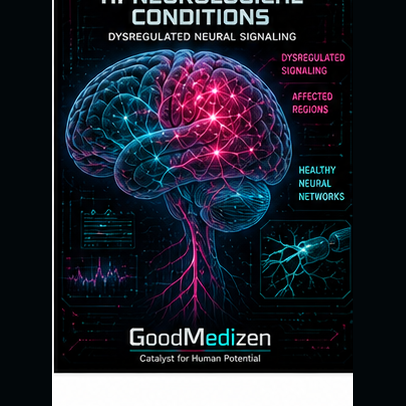
Neurological Conditions Are Rarely Just One Thing
Parkinson's disease, multiple sclerosis, Bell's palsy, trigeminal neuralgia, essential tremor, Guillain-Barré recovery, post-concussion syndrome, peripheral neuropathies of unclear cause — these are the conditions that bring patients to a neurologist's office and often leave them without a clear path forward. Conventional neurology has powerful diagnostics and a growing pharmacological toolkit. What it has less of is approaches for the in-between space: the symptoms that medications don't fully control, the functional decline that's not yet diagnosable, the recovery from acute neurological events, and the systemic inflammation and metabolic dysfunction that drive many neurological conditions in the first place.
This is the space where integrative neurological care has the most to offer. Acupuncture, Chinese herbal medicine, and functional medicine all have specific evidence and clinical applications for a wide range of neurological conditions — not as replacements for neurology, but as complements that often produce meaningful improvement where conventional approaches alone have plateaued.
What's Actually Happening in the Nervous System
Different neurological conditions involve different mechanisms, but several themes recur across the modern picture:
Neuroinflammation. Chronic, low-grade inflammation in the central nervous system is increasingly recognized as a driver of neurodegenerative and neuropsychiatric conditions. Microglia (the immune cells of the brain) become chronically activated, producing inflammatory cytokines that damage neurons and impair function. This pattern shows up in Parkinson's, MS, Alzheimer's, and even chronic depression.
Mitochondrial dysfunction. Neurons are some of the most metabolically demanding cells in the body. When mitochondrial function declines — from oxidative stress, nutrient insufficiency, environmental toxins, or aging — neurons are among the first cells to feel it. Mitochondrial dysfunction is implicated in Parkinson's, ALS, Alzheimer's, and many peripheral neuropathies.
Demyelination. The myelin sheath insulates nerves and speeds signal conduction. Damage to myelin — from autoimmune attack (MS), nutritional deficiency (B12), infection, or toxic insult — disrupts neurological function. Some conditions involve primary demyelination; in others, it's secondary damage.
Excitotoxicity. Overactivation of glutamate receptors damages neurons. This mechanism contributes to stroke, traumatic brain injury, ALS, and several other conditions.
Protein misfolding and accumulation. Alpha-synuclein in Parkinson's, amyloid and tau in Alzheimer's, TDP-43 in ALS — each neurodegenerative condition involves specific proteins that misfold and accumulate. Underlying mechanisms include impaired clearance pathways (autophagy), inflammation, and oxidative stress.
Autonomic dysregulation. Many neurological conditions involve disrupted autonomic function — dysautonomia in POTS, autonomic involvement in Parkinson's and diabetic neuropathy, vagal dysfunction in chronic conditions. The autonomic nervous system links the central nervous system to nearly every organ; its dysfunction has wide-reaching consequences.
Neuroplasticity capacity. The brain's ability to reorganize and recover varies among individuals and conditions. Inputs that support neuroplasticity — movement, novelty, social engagement, sleep, certain treatments including acupuncture — affect the trajectory.
Where TCM Comes In
Chinese medicine has frameworks for what it calls Wei syndrome (atrophy disorders), Zhong Feng (wind stroke), and various other neurological pattern types. The differentiation maps onto modern conditions clinically.
Internal Wind patterns — tremor, spasm, twitching, rigidity, and unstable movement. Maps onto tremor disorders, parkinsonism, dystonia, and seizure conditions. Subtypes include Liver Wind from Yang Rising (often with hypertension and irritability), Liver Wind from Blood Deficiency (with depletion and weakness), and External Wind invasion (acute presentations like Bell's palsy).
Liver Blood Deficiency. Tingling, numbness, dry skin, brittle nails, dizziness, muscle twitches, eye symptoms. Corresponds to nutrient-depleted neurological presentations and the sensory components of many conditions.
Kidney Yin Deficiency. Hot, dry, depleted neurological presentations — progressive weakness, low back pain, tinnitus, cognitive decline, exhaustion. Maps onto many late-stage neurodegenerative conditions.
Kidney Yang Deficiency. Cold, weak, profoundly fatigued presentations with autonomic involvement. Maps onto the dysautonomia and constitutional weakness of long-standing neurological disease.
Phlegm-misting the Mind. Cognitive impairment, confusion, slowed thinking, sometimes psychiatric symptoms. Corresponds to the cognitive component of dementia and post-stroke patterns.
Spleen Qi Deficiency with Damp. Heaviness, fatigue, edema, brain fog. Common in MS, Parkinson's, and chronic neurological conditions with systemic involvement.
How We Approach Specific Conditions
Parkinson's disease. Acupuncture has growing evidence for symptom management in Parkinson's — motor symptoms, sleep disruption, constipation, mood, and pain. Treatment doesn't replace levodopa or other Parkinson's medications, but often allows better symptom control on the same medication doses, and addresses non-motor symptoms that medications don't well address. Functional medicine focuses on mitochondrial support, gut health (the gut-brain connection in Parkinson's is significant), and neuroinflammation.
Multiple sclerosis. Treatment focuses on reducing neuroinflammation, supporting the gut-immune axis, addressing nutritional factors (vitamin D is particularly important in MS), managing fatigue and pain, and supporting neurological recovery between flares. Acupuncture has evidence for MS-related fatigue, spasticity, pain, and bladder dysfunction. Coordination with neurology is essential, especially for patients on disease-modifying therapies.
Bell's palsy and facial paralysis. Acupuncture has substantial evidence for Bell's palsy, with multiple studies showing accelerated recovery when acupuncture is added to standard treatment (steroids and antivirals when indicated). Treatment in the first weeks is most impactful. Local facial points, distal points, and electroacupuncture all have specific roles. Recovery is typically much faster and more complete with early acupuncture intervention.
Trigeminal neuralgia. Sharp, electric facial pain along the trigeminal nerve. Acupuncture, including specific facial protocols, can reduce attack frequency and severity. Functional workup looks for vascular, metabolic, or autoimmune contributors. Coordination with neurology is appropriate, particularly when carbamazepine, oxcarbazepine, or surgical options are being considered.
Essential tremor. A common condition with limited conventional options. Acupuncture, Chinese herbal medicine targeting Liver Wind patterns, and addressing contributing factors (caffeine, stress, sleep, magnesium status) can produce meaningful improvement.
Post-concussion syndrome. Persistent symptoms after head injury — headaches, cognitive symptoms, mood changes, autonomic dysregulation. Acupuncture supports nervous system regulation and recovery; functional medicine addresses neuroinflammation, mitochondrial dysfunction, and HPA axis dysregulation that often complicate recovery.
Guillain-Barré syndrome and acute inflammatory neuropathies. During and after the acute phase, acupuncture supports motor and sensory recovery, manages pain, and addresses fatigue. Coordination with neurology is essential.
Dysautonomia and POTS. Conditions involving autonomic nervous system dysfunction. Acupuncture directly modulates autonomic function; functional medicine addresses contributing factors (mast cell activation, hypermobility-related issues, viral or post-COVID involvement).
Cognitive symptoms and early cognitive decline. Memory issues, brain fog, word-finding difficulties — whether age-related, stress-related, or part of a defined condition. Treatment addresses cerebral circulation, neuroinflammation, mitochondrial function, sleep, and the systemic factors that affect brain function.
How We Approach Neurological Care
Acupuncture for neurological symptoms and underlying patterns. Specific techniques — scalp acupuncture, electroacupuncture, facial acupuncture, body acupuncture — are chosen based on the condition.
Chinese herbal medicine tailored to the TCM pattern. Several formulas have direct research evidence for neurological conditions. Selection requires expertise, especially when patients are on neurological medications.
Functional medicine assessment. Evaluation typically includes thyroid (full panel), B12 and methylation (especially with MTHFR testing where indicated), vitamin D, omega-3 index, fasting insulin and HbA1c, hs-CRP, homocysteine, and condition-specific markers. Heavy metal testing where history suggests exposure. Gut function evaluation given the strong gut-brain connection in many neurological conditions.
Targeted nutraceutical support with evidence. Omega-3 fatty acids for neuroinflammation. Methylated B-complex for homocysteine and methylation. CoQ10 and PQQ for mitochondrial function. Alpha-lipoic acid for nerve health. Lion's mane for neurogenesis (emerging evidence). Curcumin for neuroinflammation. Specific compounds chosen based on the condition and individual picture.
Lifestyle integration. Movement (specific to the condition), sleep optimization, stress regulation, and nutrition that supports brain health. Each of these is a real intervention, not a platitude.
Coordination with neurology. We work alongside neurologists, not in opposition. Most neurological patients in our clinic are also seeing a neurologist; many are on disease-specific medications. Communication and coordination produce better outcomes than parallel uncoordinated care.
When to Consider Us
- You have a neurological diagnosis and want a comprehensive integrative plan alongside conventional care
- You have neurological symptoms that haven't been clearly diagnosed and want a thorough functional workup
- You're recovering from a neurological event (concussion, Bell's palsy, GBS) and want to accelerate recovery
- Your neurological medication isn't fully controlling symptoms or is causing intolerable side effects
- You have early cognitive symptoms or family history of neurodegenerative disease and want proactive support
- You have an autonomic condition (POTS, dysautonomia) that conventional care hasn't fully addressed
- You have post-COVID neurological symptoms or chronic post-viral patterns
- You want to address the underlying inflammation, metabolic, and lifestyle factors that affect long-term neurological health
Selected References
- Lam, Y. C., et al. (2008). Efficacy and safety of acupuncture for idiopathic Parkinson's disease: A systematic review. J Altern Complement Med, 14(6), 663–671.
- Karaaslan, F. K., et al. (2018). The effects of acupuncture on the symptoms of multiple sclerosis: A systematic review. Complement Ther Med, 41, 14–20.
- Li, P., et al. (2015). Acupuncture for Bell's palsy: An overview of systematic reviews. Acupunct Med, 33(2), 96–103.
- He, L., et al. (2007). Acupuncture for Bell's palsy. Cochrane Database Syst Rev, (4), CD002914.
- Hong, Z., et al. (2017). Acupuncture for trigeminal neuralgia: A systematic review and meta-analysis. Acupunct Med, 35(2), 110–117.
- Heneka, M. T., et al. (2015). Neuroinflammation in Alzheimer's disease. Lancet Neurol, 14(4), 388–405.
Where tight or restricted tissue is part of the picture, we also offer TRACS — our trigger point and fascial release framework — to release fascia, increase circulation, and improve function alongside acupuncture.