.png)
catalyst for human potential
downtown seattle's home for personalized, integrative care: acupuncture, herbs, and functional medicine

Welcome to GoodMedizen, your Downtown Seattle Acupuncture Clinic!
Thank you for scheduling your acupuncture appointment with us. We look forward to working with you. Please spend a little time reviewing the info on this page as it will help you to get the most out of your appointment. Never hesitate to call or email us if you have any questions.
Finding Us
Our office is located in the Medical Dental Building, which is at the corner of Olive Way and 6th Ave. The primary entrance is on Olive Way next to Cherry Street Coffee, and in between Cherry Street Coffee and Verizon. The easiest parking is available across the street at Pacific Place Shopping Center with parking entrances on 6th and 7th avenues.
Please note that only one bank of elevators services the 14th floor. From the elevator, take two lefts, and Suite 1401 is the first door on the left.
Tips for your first visit
Wear loose, comfortable clothing. We will need ready access to your lower legs and arms, so think about clothes that can easily be rolled up.
Try to eat something before coming in. Acupuncture and low blood sugar don’t play well together, so a healthy meal an hour or two before your appointment is advised.
Avoid Coffee: Caffeine ramps up the nervous system, causing you to likely feel things a little stronger and be less able to relax through the treatment. Wait until after your treatment for your fix of Seattle’s finest beverage.
Other questions?
If you have other questions, please give us a call or text at 206-402-3813, or send your practitioner an email.
We are happy to help!
Thanks, and we look forward to seeing you!


Acupuncture Aftercare


What to Do After Acupuncture: Your Recovery and Aftercare Guide
You are off the table, a little floaty, maybe more relaxed than you have felt in weeks. That feeling is not nothing. It is your nervous system downshifting, and it is the start of the work, not the end of it.
At GoodMedizen, we treat acupuncture as a physiological intervention, not a vibe. Your session just changed measurable things in your body: how your nerves are firing, how your blood is moving, which chemicals your tissue is releasing. What you do in the hours and days afterward decides how much of that change you keep. This guide walks you through it: what is actually happening under the skin, what to do, what is normal, and when to reach out.
What is actually happening in your body right now
Here is the lens we work from: your body is not malfunctioning. It is responding accurately to the information it is being given. Acupuncture is one way we change that information — precisely, locally, and systemically.
A few of the mechanisms researchers have actually measured:
Adenosine and local pain relief
At the points we treat, tissue releases adenosine, a molecule that quiets pain signaling through adenosine A1 receptors on nearby sensory nerves. In a controlled study, this local adenosine surge was required for acupuncture’s pain-relieving effect, and slowing the breakdown of adenosine made the effect stronger and longer-lasting (Goldman et al., Nature Neuroscience, 2010). This is part of why relief can keep building after you leave.
Your nervous system shifts gears
During and after treatment, your autonomic nervous system tends to move out of fight-or-flight (sympathetic) and into rest-and-digest (parasympathetic). Measured with heart rate variability, treatment is associated with a rise in parasympathetic activity and a drop in heart rate (Kouzuma et al., Medical Acupuncture, 2022). That shift is the floaty, calm, sometimes sleepy feeling — and it is also the state your body does its repair work in.
Your own opioids and neuropeptides
Acupuncture stimulation prompts the central nervous system to release endogenous opioid peptides — your body’s built-in pain and mood chemistry — with different patterns depending on the type and frequency of stimulation (Han, Trends in Neurosciences, 2003). This is your own pharmacy, not a prescription.
Local circulation opens up
Inserting and stimulating a point sets off mechanical and chemical signaling in the surrounding connective tissue, including nitric oxide release, which widens local blood vessels and increases microcirculation to the area (Hsiao and Tsai, Journal of Acupuncture and Meridian Studies, 2009). More blood flow means more oxygen, more nutrient delivery, and faster clearance of inflammatory byproducts.
Put it together: you did not just relax. You triggered measurable, time-limited changes in nerve signaling, circulation, and your own neurochemistry. The next 24 hours are when those changes settle in — or get cut short.
The first hour
Rest a beat before you bolt. Stay on the table for a few minutes after we remove the needles. Your nervous system is mid-shift, and standing up too fast can make you briefly lightheaded.
Get up slowly. Move with intention. If you feel a little spacey, that is the parasympathetic shift, not a problem. Give it a minute.
Hydrate. Drink water. Not because you are “flushing toxins” — that is marketing, not physiology — but because you have increased circulation and downshifted your nervous system, and good hydration supports both and helps head off a tension headache.
Drive only if you feel clear. For your first few sessions, until you know how your body responds, line up a ride if you tend to get that pleasant, heavy-limbed lightheadedness. It is therapeutic. It is also not the state you want behind the wheel.
The first 24 hours
Movement
Acupuncture is not a reason to lie on the couch all day, and it is not a green light to PR your deadlift either. Aim for the middle.
-
Gentle movement helps. A walk, easy stretching, or light mobility work keeps circulation up and extends the benefit.
-
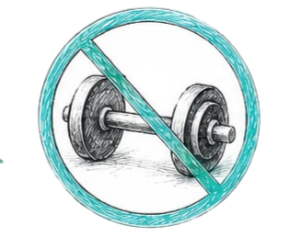
Hold off on high-intensity training for 24 to 48 hours. Hard intervals and heavy lifting pull your body back toward sympathetic overdrive — the opposite of what we just set up.
-
Skip the pool for 24 hours, especially after cupping, to keep insertion and cupping sites clean.
-
Yoga is great; skip deep inversions for the day.
Food
Your digestion is often more responsive after a session. Feed it accordingly.
-
Favor warm, simple, easy-to-digest meals.
-
Load up on vegetables and clean protein.
-
Go easy on alcohol, added sugar, and heavily processed food. Alcohol in particular can blunt the calm you just built and dehydrate you.
-
Keep drinking water through the day.
Sleep
Acupuncture often improves sleep, and sleep is where a lot of the actual repair happens.
-
If you are tired, let yourself rest. Fatigue after treatment usually means your body is spending energy on recovery.
-
Protect a real night of sleep.
-
Cut the late-night screens so you do not undo the nervous-system reset.
Make every session count
Acupuncture is cumulative. Each session builds on the last, and the early wins — less pain, better sleep — are often the surface of a deeper change still in progress.
Stick with your plan. The protocol we built is based on your specific picture. Feeling better early is the goal, not the finish line; stopping the moment symptoms ease often means they come back. Come to the sessions we mapped out.
Pay attention between visits. You are the best sensor we have.
Notice:
-
pain and symptom intensity
-
energy across the day
-
sleep and dreams
-
digestion and elimination
-
mood
Bring those notes back. They tell me what is working and what to adjust.
Support it between sessions:
-
acupressure on the points I show you
-
a few minutes of breathwork or meditation
-
an Epsom salt bath (wait 24 hours after treatment)
-
gentle tai chi or qigong
What is normal, and when to reach out
A little soreness or a small bruise at an insertion site is common and not a complication. In a multi-clinic prospective safety survey of more than 14,000 acupuncture sessions, reported reactions were mild and temporary: minor subcutaneous bleeding or small bruising in about 2.6% of sessions, brief discomfort in under 1%, and no serious or infectious events (Furuse et al., Medical Acupuncture, 2017). Numbers like these are why we treat acupuncture, performed by a licensed practitioner with single-use sterile needles, as a low-risk intervention.
Normal after a session
-
Mild soreness at a point, usually gone within a day. It is different from sharp or worsening pain. If it lasts past 48 hours, tell me.
-
A small bruise. A tiny vessel under the skin got nicked. It fades like any bruise.
-
An emotional release. Feelings sometimes surface as your system unwinds. That is normal and often useful. Be kind to yourself.
-
Fatigue or lightheadedness. Your body is recalibrating. It should pass with rest, food, and water.
Text us if you have
-
pain at an insertion site lasting more than 48 hours
-
dizziness that does not clear with rest, food, and water
-
redness, swelling, or warmth that is spreading (rare, but we want to know)
-
anything that feels off, or any question at all (206) 402-3813
Frequently asked questions
Is soreness normal after acupuncture?
Mild soreness at a point is normal and usually clears within 24 hours. It signals that the point was activated and is different from pain. If discomfort hangs on past 48 hours, reach out.
Why do I feel emotional after treatment?
Acupuncture works on the same nervous-system circuits that regulate mood, not just pain. As your system shifts out of a guarded, sympathetic state, held emotion can surface. It is common and often part of the benefit.
Why am I tired afterward?
That fatigue usually reflects a parasympathetic shift and your body directing energy toward recovery. Honor it and rest if you can. For many people it eases over a course of treatment as the system rebalances.
Can I work out or go back to normal right away?
You can return to most of your day. Keep intensity moderate for about 24 hours and save hard training for the next day so you do not pull your body back into overdrive.
Do I really need all the recommended sessions?
Often, yes. The effect is cumulative, and early relief is usually the beginning of a deeper change rather than the end of it. Stopping the moment you feel better is the most common way people lose ground.
Why so much water?
Not to flush toxins. Treatment increases local circulation and shifts your nervous system, and steady hydration supports both and helps prevent a post-session headache.
Your healing is not a straight line
Some weeks bring an obvious jump. Others are quieter, and once in a while symptoms flare briefly as your body recalibrates. That is the process, not a failure of it. Keep showing up, keep me posted, and we will keep adjusting the inputs until your body has what it needs to respond differently.
Ready to start, or have a question about your own situation?
Text us at (206) 402-3813 or visit goodmedizen.com.
Courtney M. Zeller, AEMP, L.Ac., MS
acupuncture · functional medicine — GoodMedizen, downtown Seattle
References
Mechanistic and safety references retrieved via PubMed.
Goldman N, Chen M, Fujita T, et al. Adenosine A1 receptors mediate local anti-nociceptive effects of acupuncture. Nat Neurosci. 2010;13(7):883–888. https://doi.org/10.1038/nn.2562
Han JS. Acupuncture: neuropeptide release produced by electrical stimulation of different frequencies. Trends Neurosci. 2003;26(1):17–22. https://doi.org/10.1016/s0166-2236(02)00006-1
Kouzuma N, Taguchi T, Higuchi M. Heart rate and autonomic nervous system activity relationship during acupuncture associated with postural change and effect on menopausal symptoms: a prospective randomized trial. Med Acupunct. 2022;34(5):299–307. https://doi.org/10.1089/acu.2022.0004
Hsiao SH, Tsai LJ. A neurovascular transmission model for acupuncture-induced nitric oxide. J Acupunct Meridian Stud. 2009;1(1):42–50. https://doi.org/10.1016/S2005-2901(09)60006-6
Furuse N, Shinbara H, Uehara A, et al. A multicenter prospective survey of adverse events associated with acupuncture and moxibustion in Japan. Med Acupunct. 2017;29(3):155–162. https://doi.org/10.1089/acu.2017.1230



still have questions? check out our FAQ!